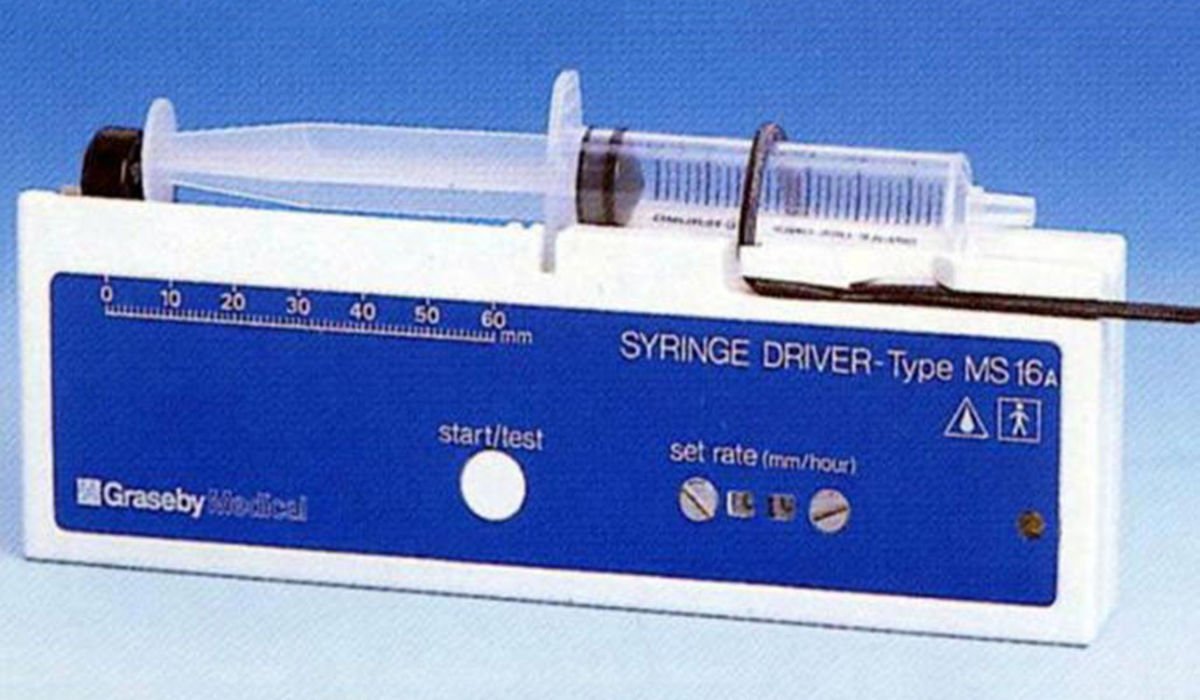
Syringe Drivers: Cure or Kill?
Neither. A syringe driver is a small, battery-powered pump that delivers a steady flow of medicine under the skin—usually over 24 hours—when swallowing tablets is hard, nausea prevents absorption, or steady relief beats repeated injections.
Fear often flares when a syringe driver appears. Because clinicians frequently use them in end-of-life care, families sometimes worry the pump hastens death. In clinical practice, it does not speed up dying; it controls distressing symptoms such as pain, sickness, breathlessness, and agitation. Nor does it cure underlying disease—it supports comfort and stability.
Crucially, syringe drivers are not strictly for the final days. Someone might use one temporarily during severe nausea or recovery, then return to oral medicines once symptoms settle. When used at the end of life, the goal remains steady symptom relief rather than ending life.
Risks are practical rather than sinister: skin irritation at the infusion site, tubing kinks, or an alarm sounding when a battery runs low. A syringe driver is neither a miracle cure nor a death sentence—it is a tool for comfort.
Syringe drivers and the end-of-life debate
Around the world, people often feel torn about whether syringe drivers actually speed up the dying process or simply bring relief at the end of life. On one hand, doctors and nurses explain that these small pumps just deliver a steady, low dose of medicine to keep patients comfortable when they can no longer swallow, and medical studies show that over 95% of cases involve doses far too small to shorten life.
“It’s about easing pain, not ending a life,” a palliative nurse named Sarah once told me. pointing out that the underlying illness is what’s really taking its toll. On the other hand, a Marie Curie cancer nurse called Mary told me, “Its not the cancer that kills them; it’s the morphine!” There will always be this ‘difference of opinion‘, but either way, families watching a loved one slip away soon after a pump starts can’t help but wonder if the strong sedatives hastened the end, leading to lasting doubts and emotional debates that don’t have easy answers… the debate rolls on!