

war
Global war is no longer a distant concept. It is a measurable, accelerating reality shaping the lives of millions. Recent conflict research shows that 2024 recorded 61 active state‑based conflicts across 36 countries, the highest number documented since modern record‑keeping began in 1946. This marks a historic turning point in global stability.
Rising Human Cost
The scale of human loss is stark. In 2024, at least 233,000 people were killed in conflicts worldwide, according to major crisis‑monitoring organisations. Another widely used dataset reports 152,000 conflict‑related deaths for the same year. While methodologies differ, both figures reveal the same trend — global conflict lethality has surged dramatically, more than doubling over the past five years.
Wars in Ukraine, Gaza, Myanmar, Sudan and the Sahel region have been among the deadliest. The war in Ukraine alone has produced tens of thousands of battlefield deaths annually, while the conflict in Gaza has resulted in extremely high civilian casualties and widespread destruction.
A Shift in Global Violence
Researchers describe the current landscape as a structural shift, not a temporary spike. Interstate wars, civil wars, proxy conflicts and cyber‑enabled hostilities now overlap in ways that make conflicts harder to contain. The number of non‑state armed groups has also increased, adding further complexity to peace efforts.
Why These Numbers Matter
These statistics are more than data — they are indicators of global instability. Rising conflict drives mass displacement, food insecurity and economic shocks, while weakening international cooperation. Humanitarian systems are stretched thin, and peacebuilding efforts face mounting obstacles.
Understanding the scale of global war is essential for shaping effective policy and strengthening diplomacy. The numbers make one thing clear — reversing this trajectory requires sustained, collective action grounded in evidence, not wishful thinking.
Justifying the Horror of War
In 1988, JAMA (Journal of the American Medical Association) called war “the most terrible scourge of the 20th century.” Estimates suggest that war killed about 90 million people during that century. For much of history, civilians made up around 50% of war deaths. However, that share climbed sharply. By the 1970s, civilians reportedly accounted for 73% of the dead, and in the 1980s, about 85%.
People often excuse mass killing in ways that echo the old defence of slavery in early America. They stop seeing the victims as fully human. The textbook The Sociology of Social Problems explains it this way, “The ‘all men are created equal’ dictum did not apply to Negroes, since they were ‘property,’ not men.” In the same way, the JAMA article said that nations deny “the full humanity of the victims,” and reduce them to labels that seem to threaten the state. In that framing, he is no longer a man, a father, a wood-carver, a small farmer, but a bourgeois. Likewise, she is no longer a woman, a student, a daughter, a lover of poetry, but a Marxist.
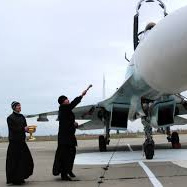
Clergy-supported nationalism has largely been responsible for the horrible slaughter, as Catholic historian E. I. Watkin acknowledged: “Whatever the official theory, in practice ‘my country is always right’ has been the maxim followed in wartime by Catholic Bishops. . . . Where belligerent nationalism is concerned, they have spoken as the mouthpiece of Caesar.”*

* The expression “they have spoken as the mouthpiece of Caesar” often appears in church history and Christian ethics. It describes times when religious leaders or groups put the aims of the state (Caesar) above the beliefs of their faith.
In practice, people use it to criticise clergy who, during war or national emergencies, back or defend government policy. As a result, they act as voices for a political regime rather than for God.
The expression “they have spoken as the mouthpiece of Caesar” often appears in church history and Christian ethics. It describes times when religious leaders or groups put the aims of the state (Caesar) above the beliefs of their faith.
In practice, people use it to criticise clergy who, during war or national emergencies, back or defend government policy. As a result, they act as voices for a political regime rather than for God.