where it all went wrong
This earth could be a wonderful place to live. Even with today’s problems, most people still find some joy in life. That’s why they will do almost anything to hold on to it. Those who give up and choose death because life feels unbearable remain a small fraction of the earth’s nearly 8.3 billion people.
Yet lasting happiness still escapes humanity as a whole. Even when life seems good, troubles return and eat away at peace of mind. Anxiety, uncertainty, frustration, and at times, deep disappointment, heartbreak, and depression keep showing up. These harms don’t fade with time. They cross borders and touch lives everywhere. Today, severe conditions on a huge scale threaten us all.
Something is out of balance in the human family. This disorder had a starting point, in a real place and time.
A Family Problem
When we read history and work backwards, century by century, we keep finding the same pattern. Violence, crime, war, oppression, poverty, hunger, and disease appear again and again. The record continues until written history runs out.
Even so, the story points to one human family. Modern science also recognises this. As anthropologist M. F. Ashley Montagu states, “All varieties of man belong to the same species and have the same remote ancestry. This is a conclusion to which all the relevant evidence of comparative anatomy, paleontology, serology, and genetics, points. On genetic grounds alone it is virtually impossible to conceive of the varieties of man as having originated separately.”
In other words, the human family is one. We all share the same parents somewhere far back in time. A statement from the United Nations Educational, Scientific and Cultural Organization (UNESCO) puts it this way,
- “All of us, if we went back far enough, hundreds of generations, would arrive at the same place, the base of the human family tree . . . Our common ancestor could as well be called Adam, which also means man in Hebrew, for the familiar Biblical story foreshadowed the evidence of science that present men derive from a common stock.”
The One Historical Source That Reaches the Beginning
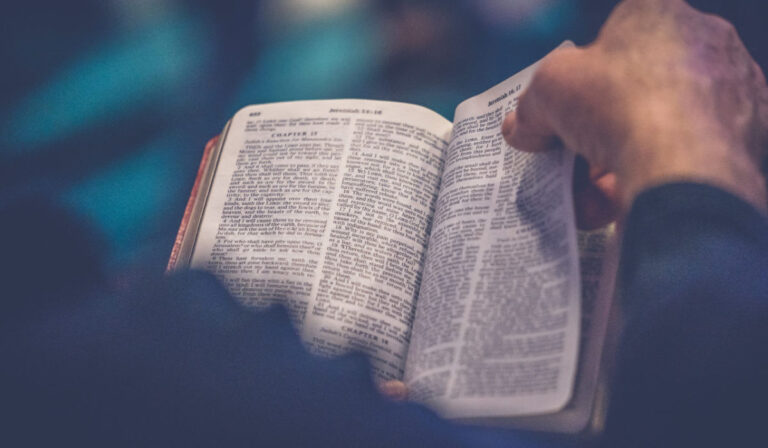
Secular history does not take us back to mankind’s first steps. Its written records fade as they approach the third millennium before the Common Era. However, one historical record claims to go all the way back, the Bible.
Many people have never examined it closely. If that’s the case, it may surprise them that the Bible provides a connected and dated account that stands apart from other ancient records and from other so called sacred writings. Its timeline is detailed enough that Luke, a first-century historian and doctor, traced Jesus’ genealogy back through about four thousand years, name by name, all the way to Adam.
The Bible also explains how human suffering began and why it became a shared inheritance that humans cannot erase on their own. No other historical account explains it in the same way. Without a historical source, we are left with opinion and guesswork, and people disagree sharply. Given how large this question is, it makes sense to consider what Biblical history says and weigh its reasonableness.
A Perfect Start for Mankind
The Bible presents Adam and Eve as created perfect in mind and body. That fits with what it says about God.
“Perfect is his activity” (Deut. 32, 4).
The account describes careful preparation for the first human pair. Just as parents get ready for a new child, the Bible says God made ready a home for his first human son and daughter. He did not place them in a swamp, cave, wilderness, or jungle. He placed them in a park-like garden, full of fruit-bearing and other trees, with no need to go hungry. He also gave them meaningful work. In addition, he set achievable goals, they were to spread garden conditions across the whole earth, helped by the children they would have.
Nothing here suggests neglect. The goal set out in Genesis matches what humans have long tried to achieve, a healthy earth, free from hunger and want, filled with people doing satisfying work. Yet the world has moved in the opposite direction. Pollution has spread, and the natural balance has been badly damaged. The Bible also gives a clear reason for that, and it does so in a practical way.
A Test of What Was Good
Many know the Bible account says God placed one tree in the garden off limits. Eating its fruit would bring death.
“But as for the tree of the knowledge of good and bad, you must not eat from it, for in the day you eat from it you will certainly die” (Gen. 2, 17).
Still, people often miss the wisdom behind this arrangement.
Good parents do more than provide food and shelter. They teach right and wrong and help children build sound standards. If parents let children do whatever they want, that is not care, it is neglect. When parents abandon training and guidance, the result often includes serious behaviour problems and deep family pain.
In the same way, God taught the first human pair a clear standard. He was their Life-Giver. If they treated him and his word with disrespect, it would not bring good results. It would be out of step with reality. That path would encourage selfishness, pride, and ingratitude, not peace.
On the other hand, respect for God would bring lasting benefits. It would keep them open to his wisdom, power, and love. It would also support harmony between humans, because respect for God helps people respect one another. Many of today’s problems come from self-centred choices and lack of concern for neighbours. Against that background, the value of God’s standard becomes easier to see.
The “tree of the knowledge of good and bad” represented God’s right, as Universal Sovereign, to set the standard for what is good and what is bad for his creatures.
God also chose a considerate and dignified test. Although Adam and Eve were created as adults, they were new to life. So God did not burden them with something complex. He used a simple daily action, eating. The rule did not suggest that humans had corrupt urges, because eating was normal and proper. And the limit did not trap them or spoil their enjoyment, since they had access to every other fruit-bearing tree.
Later, Jesus stated a principle that fits this point.
“The person faithful in what is least is faithful also in much, and the person unrighteous in what is least is unrighteous also in much” (Luke 16, 10).
The Freedom to Choose
The Bible also shows that God gave Adam and Eve freedom of choice, or free moral agency. He did this because he cared about them. He showed love by giving them life and providing for their happiness. If he had made them unable to disobey, they could never show real love in return. Their obedience would have been automatic.
Real love involves choosing to do what pleases someone you care about. The Bible frames that choice clearly.
“See, I do put before you today life and good, and death and bad” (Deut. 30, 15).
“If you listen to the commandments of Jehovah your God that I am commanding you today, to love Jehovah your God, to walk in his ways, and to keep his commandments, his statutes, and his judicial decisions, then you will live and multiply, and Jehovah your God will bless you in the land you are going to take possession of” (Deut. 30, 1
“If you listen to the commandments of Jehovah your God that I am commanding you today, to love Jehovah your God, to walk in his ways, and to keep his commandments, his statutes, and his judicial decisions, then you will live and multiply, and Jehovah your God will bless you in the land you are going to take possession of” (Deut. 30, 16).
People also understand this in everyday life. We feel happiest when we do good for others because we want to. Likewise, we value kindness most when we know it was freely given.
The account says our first parents chose disobedience. That choice may seem shocking, yet human history shows how far people can go. Faithful marriage mates get betrayed. Children turn against parents, and parents against children, sometimes with no good reason. Whole communities have turned on neighbours, even to the point of mass killing, often stirred by propaganda that fuels distrust and selfish desire.
The Bible says Eve faced similar propaganda from a rebellious spirit son of God. She could have resisted it, just as imperfect people can resist harmful pressure today. Instead, she allowed doubt to grow. She began to view God as unfair, as if he were holding something back. She then broke God’s law about the tree and its fruit. After that, Adam joined her.
The Results of Disloyalty
Even simple actions can set off huge consequences. A small mistake in building safety can cause a deadly collapse. A neglected fault in a dam can lead to a break and a flood. One act of corruption by a ruler can spread wrongdoing through a whole government and harm millions.
In the same way, Adam’s disloyalty pushed the human family into sin and imperfection. The Bible states a clear principle about cause and effect.
“Do not be misled, God is not one to be mocked. For whatever a man is sowing, this he will also reap, because the one sowing with a view to his flesh will reap corruption from his flesh, but the one sowing with a view to the spirit will reap everlasting life from the spirit” (Gal. 6, 7, 8).
Adam put fleshly desire ahead of spiritual interests. In a similar way, a wave of materialism today has drowned out concern for God’s guidance. Adam reaped imperfection and corruption, then passed them to his children. The Bible explains it in direct terms.
“That is why, just as through one man sin entered into the world and death through sin, and thus death spread to all men because they had all sinned” (Rom. 5, 12).
We see a comparable pattern in life now. A man who chooses immoral conduct and contracts a venereal disease, or who damages his body through drug abuse, can bring suffering to his children. God does not deserve blame for that man’s choices. Likewise, God does not bear the blame for Adam’s lack of care and what followed.
The Bible places responsibility where it belongs.
“See. This only I have found, that the true God made mankind upright, but they themselves have sought out many plans” (Eccl. 7, 29).
Even though God did not cause human suffering, a serious question remains. God could have ended it long ago, yet he has allowed time to pass. The reason, according to the Bible, reflects care for mankind’s lasting good. What is that reason?