Who Authored the Bible?
The Bible doesn’t hide who wrote its pages. Different sections start with phrases like “the words of Nehemiah,” “the vision of Isaiah,” and “the word of Jehovah that occurred to Joel” (Nehemiah 1 vs 1, Isaiah 1 vs 1, Joel 1 vs 1). Certain historical accounts are credited to Gad, Nathan, or Samuel (1 Chronicles 29 vs 29). The headings of several psalms also name their composers, such as Psalms 79, 88, 89, 90, 103, and 127.
Because human hands wrote the Bible, doubters claim it’s just a collection of human ideas, much like any other book. Does that argument really hold up?
Forty Writers, One Author
Most Bible writers admitted they were writing on behalf of Jehovah, the one true God, and that He or an angelic messenger guided them (Zechariah 1 vs 7, 9). The prophets who penned the Hebrew Scriptures declared more than 300 times, “This is what Jehovah has said” (Amos 1 vs 3, Micah 2 vs 3, Nahum 1 vs 12). Many of their books begin with lines like “the word of Jehovah that occurred to Hosea” (Hosea 1 vs 1, Jonah 1 vs 1). Speaking about God’s prophets, the apostle Peter noted, “Men spoke from God as they were borne along by holy spirit” (2 Peter 1 vs 21).
So, the Bible is a combined yet unified collection written by dozens of men who recognised God as the true source behind their work. Simply put, God used human secretaries to write down His thoughts. How did He pull this off?
“Inspired of God”
“All Scripture is inspired of God,” explained the apostle Paul (2 Timothy 3 vs 16). The original Greek phrase translated as “inspired of God” literally means “God-breathed.” This means God used an unseen force to guide the minds of human writers, passing His message on to them. For the Ten Commandments, though, Jehovah carved the words onto stone tablets Himself (Exodus 31 vs 18). At other times, God dictated His message straight to His servants. Exodus 34 vs 27 says, “Jehovah went on to say to Moses, ‘Write down for yourself these words'”
On different occasions, God gave men visions of what He wanted recorded. Ezekiel remarked, “I began to see visions of God” (Ezekiel 1 vs 1). In a similar way, “Daniel himself beheld a dream and visions of his head upon his bed. At that time he wrote down the dream itself” (Daniel 7 vs 1). The Bible’s final book, Revelation, came to the apostle John the exact same way. John recorded, “By inspiration I came to be in the Lord’s day, and I heard behind me a strong voice like that of a trumpet, saying, ‘What you see write in a scroll'” (Revelation 1 vs 10, 11).
The Human Touch
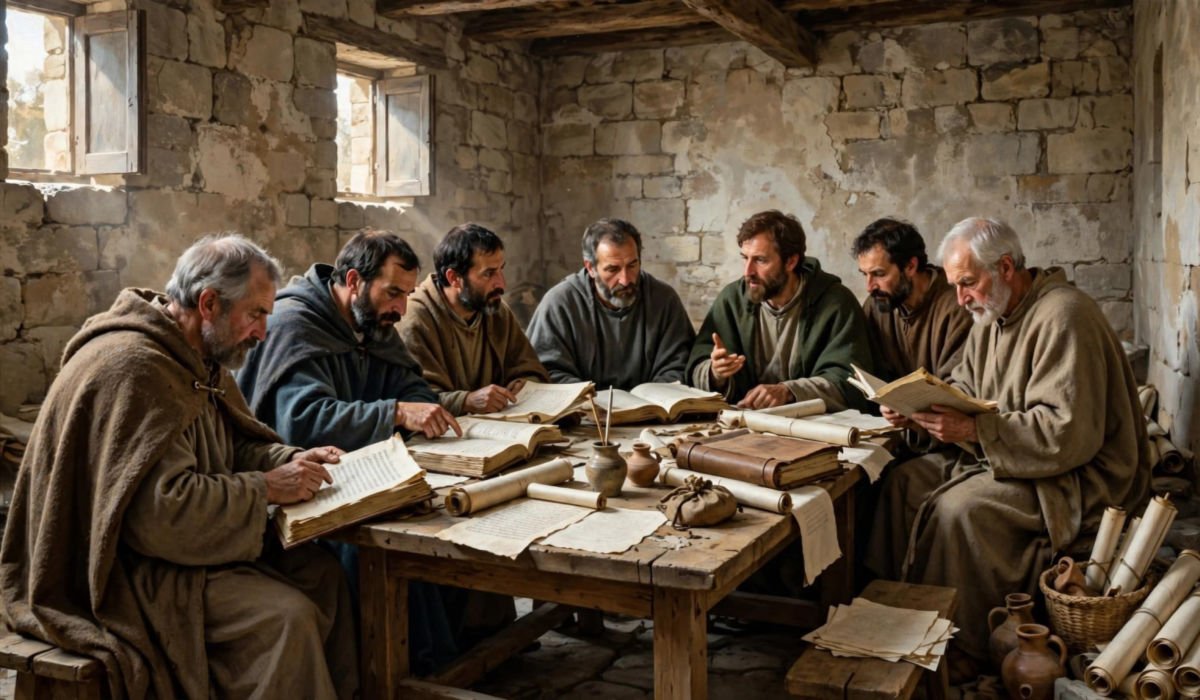
Divine inspiration didn’t erase a writer’s unique personality. In fact, putting God’s message on paper took real personal effort. The writer of Ecclesiastes mentioned that he “sought to find the delightful words and the writing of correct words of truth” (Ecclesiastes 12 vs 10). To pull together his historical record, Ezra checked at least 14 different sources, including “the account of the affairs of the days of King David” and “the Book of the Kings of Judah and of Israel” (1 Chronicles 27 vs 24, 2 Chronicles 16 vs 11). The Gospel writer Luke “traced all things from the start with accuracy, to write them in logical order” (Luke 1 vs 3).
Certain Bible books clearly show the writer’s background. Matthew, who worked as a tax collector before following Jesus, paid close attention to figures. He’s the only Gospel writer to mention that the price for betraying Jesus was “thirty silver pieces” (Matthew 27 vs 3, Mark 2 vs 14).
Luke, a doctor, noted precise medical details. When describing the illnesses of people Jesus cured, he used terms like “high fever” and “full of leprosy” (Luke 4 vs 38, 5 vs 12, Colossians 4 vs 14). Jehovah frequently let writers use their own words and style while still guiding their minds so the text stayed accurate and delivered His exact message (Proverbs 16 vs 9).
The End Product
Isn’t it remarkable that roughly 40 men, writing across various regions over 1,600 years, created a book that agrees with itself in every detail and follows one clear, uplifting theme? That would be impossible without one single author guiding them all.
Did Jehovah have to use humans to write His Word? No, He didn’t. Choosing to do so, however, shows real wisdom. One big reason the Bible connects with people across the world is that its writers honestly capture every human emotion. In King David’s case, we even see the deep guilt of a sorry sinner begging for God’s mercy (Psalm 51 vs 2-4, 13, 17).
Even though Jehovah used human writers, we can trust their work just as much as the first Christians did. They accepted the Holy Scriptures:
“Indeed, that is why we also thank God unceasingly, because when you received God’s word, which you heard from us, you accepted it not as the word of men but just as it truthfully is, as the word of God, which is also at work in you believers.“
– 1Thessalonians 2:13