the sun
The Unusual Nature of Our Sun
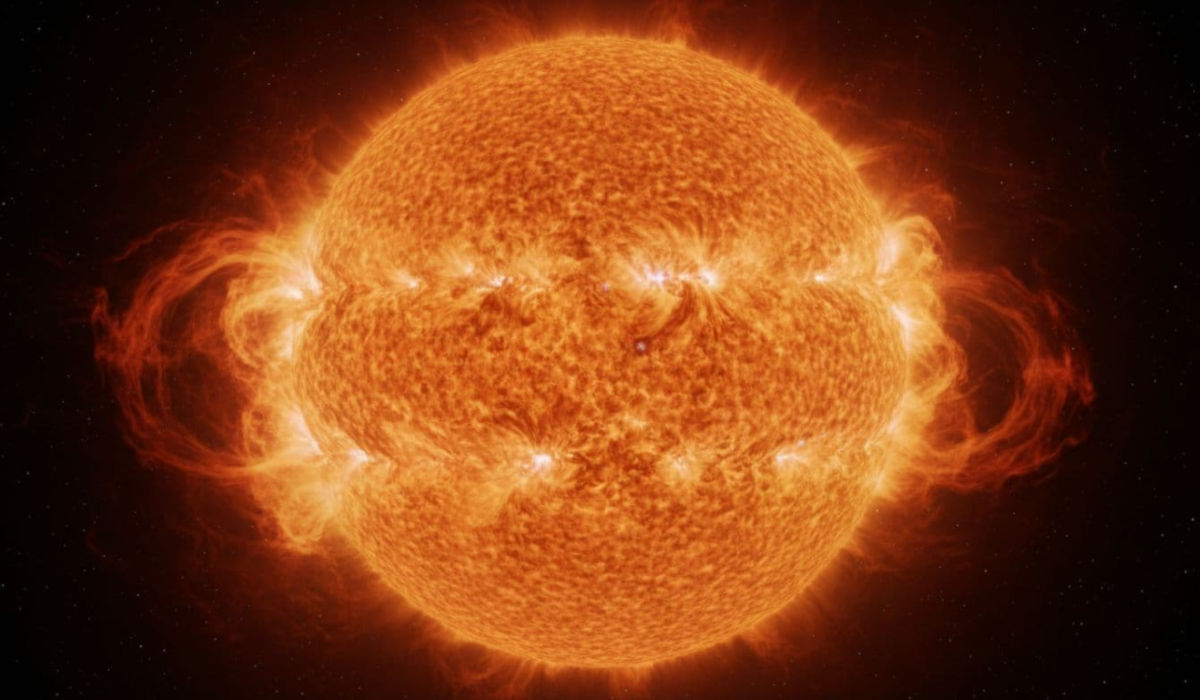
The sun’s up, or it’ll be up soon. Without its light and heat, Earth goes dead fast, from bacteria to whales.
Plenty of books call the Sun “ordinary”. Some astronomers don’t buy that. Dr Ethan Morales (US-based) says the Sun has a rare mix of traits that make intelligent life more likely, and chasing the wrong stars wastes time. Keep in mind, big claims about the universe often rest on models and best-fit ideas.
Key Features That Support Life
Roughly 85% of nearby stars sit in systems of two or more. The Sun flies solo. Dr Nadia Holt notes single-star systems seem less common, and they help keep a planet’s orbit steadier. Steady orbit, steady climate, fewer nasty surprises.
A relatively high mass
Dr Morales points out the Sun sits in the top 10% by mass among nearby stars. Dr Holt adds it holds about 99.87% of the solar system’s mass, so its gravity keeps things in line. Earth can sit about 93 million miles (150 million km) away and stay securely held, far enough to avoid turning into a roasting tray.
More heavy elements than many similar stars
The Sun has more heavy elements than many stars like it. Dr Morales says around 50% more of elements such as carbon, nitrogen, oxygen, magnesium, silicon, and iron. These “metals” are needed for rocky planets and the chemistry of life. They’re scarce across the universe (less than 1%), yet Earth is packed with them!
A less stretched path around the galaxy
Stars like the Sun often track a near-circular path around the Milky Way’s centre. The Sun’s orbit is less oval than many similar stars. That cuts trips into the busy inner galaxy, where supernovas are more common. Fewer close calls, better odds for long-term life.
A steadier brightness
The Sun’s brightness doesn’t swing around as much as many similar stars. Dr Lewis Grant wrote that our being here hints that the Sun’s steady output has helped keep Earth’s conditions more stable.
A small tilt to the Milky Way’s plane
The Sun’s orbit isn’t sharply tilted against the galaxy’s main plane. That matters because far out sits the Oort cloud, a huge shell of comets. A bigger tilt could jolt that cloud more often and fling extra comets inward. A heavy bombardment isn’t “character-building”; it’s extinction.
What Total Solar Eclipses Can Show
Our solar system has at least 60 moons across seven planets, but Earth seems to be the only place where people can watch total solar eclipses like we do.
A total eclipse needs the Moon to cover the Sun almost perfectly. It works because the Sun is about 400 times wider than the Moon and about 400 times farther away. That same Sun-to-Earth distance also sets Earth’s temperature range. Dr Morales says a bit closer or farther and life likely struggles.
The Moon also helps by calming Earth’s wobble. Without that stabilising pull, Earth’s tilt could swing harder, pushing wild climate shifts.
Chance or Design?
Imagine a car tuned so well it purrs, and someone shrugs and says it “just happened”. That’s the vibe some people get from the Sun’s life-friendly set-up, its make-up, its orbit, Earth’s distance, and the Moon’s size. Many find “pure luck” thin as an excuse.
For those who see purpose in it, the Bible puts it plainly:
“His invisible qualities are clearly seen from the world’s creation onwards, because they are perceived by the things made, even his eternal power and Godship.” (Romans 1:20)

Only about half a billionth of the Sun’s energy hits Earth, yet it still runs the whole show. Catch it well, and it could cover modern energy use …. and some!