

the beginning
A lot of us simply repeat the story about our origins that we heard from parents and teachers. It becomes part of the background of life, so we rarely stop to ask whether it actually makes sense. It’s easier to trust the voices we grew up with than to dig around for new explanations, especially when everyone around us seems to accept the same thing.
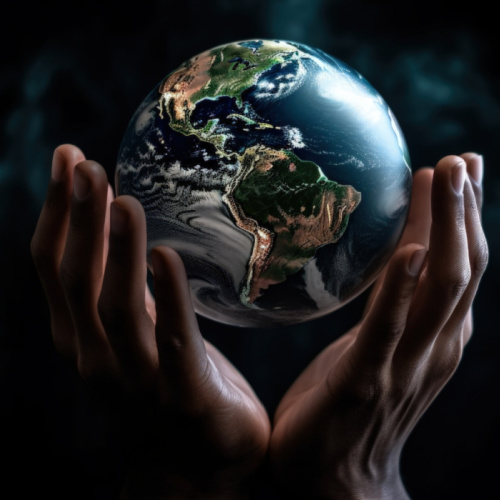
People often say we began with a random Big Bang, or that humans came from apes over time. Others aren’t convinced those ideas explain life well enough. If you’re in that second group, you’re not alone. This post is a simple invitation to look at what’s right in front of you – nature, order, and life itself – and consider God as Creator.
“The heavens are declaring the glory of God; the skies above proclaim the work of his hands.” Psalm 19:1
What we’re told about our origins, and why many people doubt it
At school, on TV, and online, most origin stories point to chance and long ages. Some people accept that. Still, many others feel the explanation sounds incomplete, especially when it comes to meaning, purpose, and why life looks designed.
Doubts don’t always come from ignorance. Sometimes they come from paying attention. When you see careful order in everyday life, chance can start to feel like a dodgy answer!
Big Bang and evolution in plain language
The Big Bang is the idea that the universe began from a tiny starting point and then expanded. Over time, that led to stars, planets, and everything we see.
Evolution, in simple terms, says living things changed little by little over many years. In that view, humans and apes share a distant family line.
Why “chance” can feel like an unsatisfying answer

Chance doesn’t give people much to hold on to, does it? It doesn’t explain why we long for justice, love, and meaning. It also clashes with what we know from daily life.
A house doesn’t appear because bricks blew into place. A recipe doesn’t write itself. When you see a clear result, you expect a mind behind it. In the same way, many people look at life and think design fits better than accident.
Look around you; everyday signs that point to a designer.
Creation speaks in quiet ways. Consider the human eye; it takes in light, adjusts focus, and sends signals to the brain. Think about DNA; it works like instructions inside each living cell. Then look up at the night sky, where patterns repeat with steady timing.
For many believers, this isn’t ‘lab-sense’ proof, but they are strong signs of order, purpose, and care!
“For his invisible qualities are clearly seen from the world’s creation onwards, because they are perceived by the things made.” Romans 1:20
Order, patterns, and “built-in” instructions
Living things follow clear patterns. Seeds grow into their own kind. Bodies heal cuts. Birds migrate at the right time. These processes don’t feel random when you watch them closely.
Order doesn’t remove questions, but it points somewhere. Many see it as a fingerprint of a wise Maker.
Beauty and usefulness aren’t accidents to many people
Take the water cycle. Water rises, forms clouds, falls as rain, and fills rivers again. It supports crops, quenches thirst, and cleans the air. It’s both beautiful and useful, which matches human need in a remarkable way.
What this means for you: purpose, value, and a response to God
If God made mankind, life has dignity. Your choices matter. Your pain matters. Your hopes aren’t foolish.
A gentle next step is simple. Spend time outside, notice the details, and thank God in prayer. Then read a Gospel account and ask for understanding.
“And God went on to create the man in his image; in God’s image he created him; male and female he created them.” Genesis 1:27
You’re not an accident; you’re made with purpose
You’re more than a set of reactions. You’re a person with a conscience, the ability to love, and the need for truth. That fits the Bible’s message that humans were made to know God and reflect his qualities.
Conclusion
Many people trust chance-based origins. Others look at nature, human life, and the order around us and see the clear marks of a Creator. This week, why don’t you slow down a little and really observe what you usually rush past? Then ask yourself what kind of God could make a world like this.