A House Divided
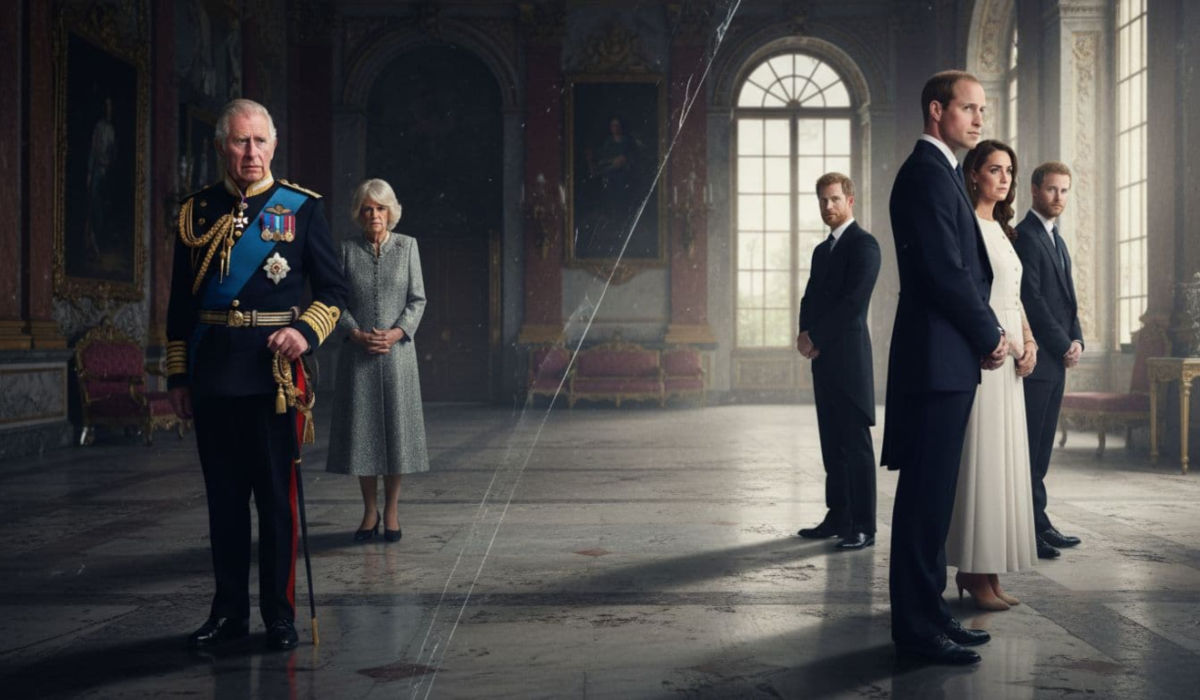
For generations, the monarchy has been framed as a symbol of unity, continuity, and national identity. Yet today, that image feels increasingly hollow. Instead of standing as a cohesive institution rooted in duty, the royal family appears fractured, contradictory, and deeply entangled in its own narratives. The public is asked to show loyalty, but loyalty cannot be demanded by an institution that struggles to demonstrate integrity.
The split within the royal household—fuelled by public disputes, conflicting accounts, and carefully curated media performances—has exposed a deeper problem. When members of the same institution tell incompatible stories, the result is not dignity but distrust. People are left trying to decipher who is telling the truth, and the palace’s insistence on silence or selective disclosure only intensifies suspicion. In an age of transparency, opacity looks like guilt.
Respect is not inherited; it is earned. And institutions that rely on inherited privilege must work even harder to maintain credibility. When the monarchy presents itself as morally authoritative while simultaneously engaging in contradictory messaging, strategic leaks, and reputation‑management campaigns, it undermines the very foundation on which its legitimacy rests.
Many people now question whether the monarchy still represents national unity or whether it has become a stage for internal conflict and public manipulation. The expectation that the public should continue offering unconditional respect feels increasingly outdated. Respect must be reciprocal. It requires honesty, accountability, and coherence—qualities the monarchy struggles to display consistently.
A divided institution cannot convincingly claim to be a unifying force. And a monarchy that cannot command trust cannot expect deference. The public is right to scrutinise, question, and withhold respect when the behaviour of the institution no longer aligns with the values it claims to embody.
a prince of disgrace
In May 2020, Andrew announced that he would withdraw from public roles for an indefinite period. By October 2025, continuing controversy over his association with Jeffrey Epstein resulted in the removal of his honours, styles, and royal titles — including both the peerage of Duke of York and his birth title of prince. In February 2026, police arrested him on suspicion of misconduct in public office in connection with those Epstein links.
Criticism over the Epstein relationship
In March 2011, BBC News reported growing criticism of Andrew’s friendship with the American financier and convicted sex offender Jeffrey Epstein. Calls followed for him to step down as trade envoy. Media scrutiny intensified after his former wife, Sarah Ferguson, said he had helped arrange for Epstein to pay £15,000 of her debts.
Further controversy arose when photographers captured Andrew walking with Epstein in New York’s Central Park in December 2010, shortly after Epstein’s release from prison. By July 2011, officials ended Andrew’s envoy role, and reports indicated he had cut off contact with Epstein.
time to go?
Arguments for abolishing the monarchy often focus on themes of democracy, equality, and the financial burden placed on taxpayers. Critics contend that the institution is outdated and no longer aligns with contemporary social and political values.
Key arguments commonly raised include:
- Democratic LegitimacyA monarchy is based on inherited authority, which campaigners argue conflicts with democratic principles that require leaders to be elected and publicly accountable. Groups such as Republic maintain that an unelected head of state cannot genuinely represent the population and that a modern democracy should appoint an independent, elected figure to provide proper oversight of political power.
- Public Cost
Although the monarchy generates some income, opponents argue that the overall expense to the public is far higher than official figures suggest. Estimates that include security and foregone revenue from hereditary estates—such as the Scottish Greens’ 2022 calculation of more than £500 million annually—are cited as evidence that the financial burden is excessive, especially during periods of economic strain and cuts to public services. - Inequality and Privilege
Critics argue that hereditary status at the top of society reinforces class divisions and an outdated social order. The monarch and their family receive wealth, status, and certain legal exemptions by birth alone, which opponents view as incompatible with the ideals of a fair and egalitarian society. - Accountability
The Royal Family is not subject to the same scrutiny as elected officials. The monarch cannot be sued, and parliamentary conventions such as “Crown consent” on legislation affecting royal interests are seen by critics as forms of unchecked influence that lack transparency. - Colonial Legacy
In several Commonwealth nations, the monarchy is viewed as a remnant of British imperial rule. For some, removing the Crown is part of confronting colonial history and establishing a more inclusive national identity. - Modern Relevance
Opponents argue that the monarchy no longer serves a meaningful political function in the 21st century. They propose a republic with a written constitution and an elected head of state—similar to systems in countries such as Ireland or Germany—as a more democratic and contemporary alternative.
Support for the monarchy at its lowest level since records began
When the question was first asked in 1983, over four in five (86%) people in Britain said it was ‘very important’ or ‘quite important’ to continue having a monarchy. In 2024, around a half (51%) now take this view, the lowest level of support recorded since NatCen began tracking public opinion.
Meanwhile, the proportion who say the monarchy is ‘not very important’ or ‘not at all important’ has risen from one in ten (10%) in 1983 to around three in ten (31%) in 2024. Support for outright abolition of the monarchy has also grown, from just 3% in 1983 to 15% in 2024.
Monarchy versus elected head of state
For the first time, the BSA survey asked the public to choose between keeping the monarchy or replacing it with an elected head of state. A majority (58%) favour retaining the monarchy, while nearly four in ten (38%) would prefer an elected head of state.
But the data shows sharp divides across age, politics and identity:
- Generational divide: Almost six in ten (59%) of younger people aged 16–34 favour an elected head of state, whereas three-quarters (76%) of those aged 55+ support continuation of the monarchy.
- Political divide: 82% of Conservative supporters want to keep the monarchy, while Labour supporters are evenly split (49% for the monarchy vs 48% for an elected head of state). Support for an elected head of state is strong among Green (70%) supporters. Whereas 57% of Liberal Democrat and 77% of Reform UK supporters prefer to continue having a monarchy.
- Regional divide: A majority of people who identify as Scottish (59%) and Welsh (64%) favour an elected head of state, while support for the monarchy is strongest among those identifying as British (62%) or English (68%).
Support for the monarchy has not declined evenly over time. It rose sharply in 2011 and 2012, coinciding with the royal wedding of the Prince and Princess of Wales, HM The Queen’s Diamond Jubilee, and her participation in the London Olympics. But since then, support has fallen steadily, with a brief rise following the death of HM The Queen Elizabeth II in 2022 before resuming its decline.
Alex Scholes, Research Director, National Centre for Social Research, said:
“British Social Attitudes has been tracking views on the monarchy for over 40 years, and the latest data show just how much opinion has shifted. Support for the monarchy is now at its lowest level since our records began, with more people than ever questioning its future. At the same time, when asked to choose directly, a majority of the public still prefer to keep the monarchy over moving to an elected head of state. This tension, between declining importance and continued preference, will be crucial in shaping debates about the monarchy’s role in the years ahead.”