built for eternity
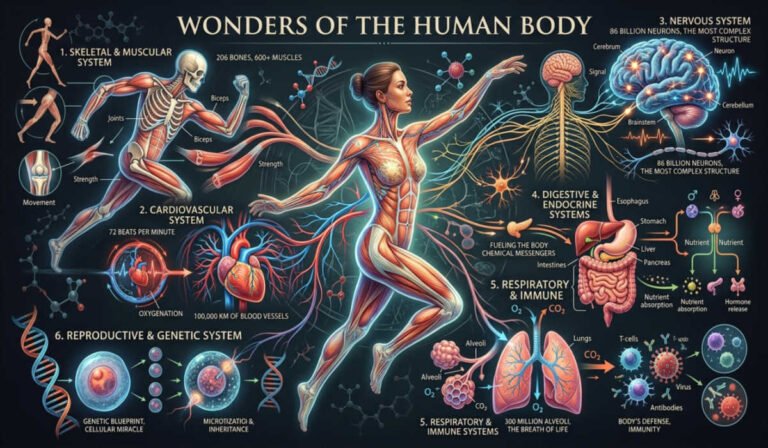
The human body is an absolute wonder. Its growth and development are nothing short of miraculous. Seeing these amazing details, many modern researchers find ageing and death completely puzzling. Do you?
Biologist Steven Austad wrote that ageing happens so often we forget it’s a massive biological mystery. The fact that everyone grows old makes it seem normal. Still, when you stop to think, does ageing actually make sense?
In his book on ageing, Dr Leonard Hayflick praised the marvels of human life, writing…
“After performing the miracles that take us from conception to birth and then to adulthood, nature chose not to devise what would seem to be a more elementary mechanism to simply maintain those miracles forever. This insight has puzzled biogerontologists for decades.”
Does ageing confuse you too? What purpose does it serve? Hayflick noted that while almost all biological events up to adulthood have a clear purpose, ageing doesn’t. We’ve learned a lot about biology, yet we’re left with an aimless process that leads straight to death. Could it be that we weren’t meant to grow old but to live forever on earth?
The Desire to Live
Almost nobody wants to grow old and die. Many deeply fear it. Medical doctor Sherwin Nuland wrote… “Do you know anyone who actually wants to get sick and die?
None of us seems psychologically able to cope with the thought of our own state of death, with the idea of a permanent unconsciousness in which there is neither void nor vacuum—in which there is simply nothing.”
If ageing were just part of a master plan, wouldn’t we welcome it? Instead, we fight it. The Bible explains why…
“[God] has even put eternity into [our] minds.”
Ecclesiastes 3:11
Because He placed a desire for an endless future within us, people have spent centuries looking for a fountain of youth. But do we really have the potential to live longer?
Designed to Self-Repair
Writing in Natural History magazine, Austad noted that we often compare ourselves to machines, assuming we just wear out. But biological organisms aren’t machines. They fix themselves. Wounds heal, bones mend, and sickness passes.
So why do we age? Why should living bodies suffer machine-like wear and tear? Since our tissues replace themselves, couldn’t they keep going indefinitely? In Discover magazine, evolutionary biologist Jared Diamond discussed our body’s repair systems. He wrote…
“The most visible example of damage control applied to our bodies is wound healing, by which we repair damage to our skin. Many animals can achieve much more spectacular results than we can: lizards can regenerate severed tails, starfish and crabs their limbs, and sea cucumbers their intestines.”
Diamond also noted that humans grow two sets of teeth, elephants get six, and sharks grow an endless supply. Microscopic replacements happen constantly too. We replace the lining of our intestines every few days, our bladder lining every two months, and red blood cells every four months.
At a molecular level, proteins turn over constantly to prevent damaged material from piling up. Diamond explained…
“While all the king’s horses and men couldn’t put Humpty Dumpty together again, nature is taking us apart and putting us back together every day.”
Most body cells are regularly replaced. Even non-dividing cells like brain neurones replace their internal parts over time. Hayflick pointed out that if every part of a cell gets swapped out, it isn’t really the same old cell anymore. Theoretically, this continuous recycling could keep us alive forever.
The Miraculous Cell
An adult body has around 100 trillion complex cells. Newsweek once compared a cell to a walled city…
“Power plants generate the cell’s energy… Factories produce proteins, vital units of chemical commerce. Complex transportation systems guide specific chemicals from point to point within the cell and beyond. Sentries at the barricades control the export and import markets and monitor the outside world for signs of danger. Disciplined biological armies stand ready to grapple with invaders. A centralised genetic government maintains order.”
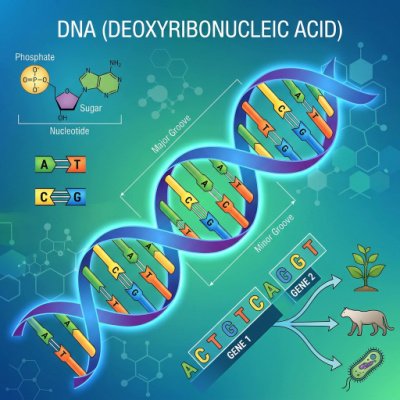
You started as a single cell when your parents’ reproductive cells united. Inside that single cell was the DNA blueprint for your whole body. Written out, those instructions would fill a thousand 600-page books. That first cell divided into two, then four, and kept going.
After nine months, you were born. What’s incredible is that every single new cell inherited the exact same full instruction manual as the original fertilised egg.
Each cell somehow knows which part of the manual to read. A heart cell reads heart instructions and ignores the rest. A liver cell reads liver instructions. This unexplained ability to activate certain genes while hiding others is another true miracle. On top of that, heart cells built their own electrical timing system to keep a steady rhythm. It’s more efficient than any machine humans have ever created.
The Unmatched Human Brain
The brain is even more astounding. Just three weeks after conception, brain cells start forming. Eventually, around 100 billion neurones are packed inside. Time magazine reported…
“Each one of these receives input from about 10,000 other neurones in the brain… and sends messages to a thousand more.”
Astronomer Carl Sagan estimated the brain can store information equal to twenty million library volumes. Author George Leonard suggested the brain’s creative capacity might actually be infinite.
Neuroscientist Gerald Edelman noted that a tiny piece of brain tissue contains connections that can combine in hyperastronomical ways. Molecular biologist James Watson called the brain “the most complex thing we have yet discovered in our universe.” Neurologist Richard Restak added…
“The brain’s uniqueness stems from the fact that nowhere in the known universe is there anything even remotely resembling it.”
Researchers estimate we use only a tiny fraction of our brain power during our lives, around 0.01%. Does it make sense to have a brain with infinite potential if we never get to use it? Isn’t it far more reasonable that we were designed with the capacity to learn forever? If that’s true, why do we grow old? What went wrong? Why do our bodies shut down after just 70 or 80 years when they seem built to last forever?