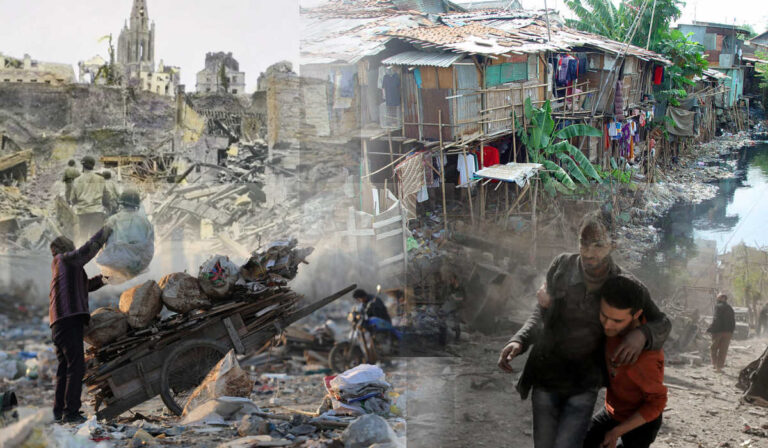
problem solving
Will our problems be solved – if so, by whom?
Many older people live in hard conditions, and Social Security finances look weak. These problems will be settled, that much is certain. And no, the fix won’t come from a clever update in how Social Security is run. In much of the Western world, public finances have worsened over recent years, not improved.
Social Security’s Future
Under the current setup, Social Security pressures are expected to grow fast. In the United States last year, Social Security paid out about three billion dollars more than it collected in taxes set aside for that purpose.
That gap is widening as more people reach retirement age. The future amounts owed to workers paying in today are huge. Some economists think those promised benefits may never be paid in full.
A major financial newspaper reported that obligations already on the books, even before allowing for rises to match inflation, could leave at least a projected $2.5 trillion deficit in the Social Security system. It also challenged the claim that the nation “owes the debt to itself” and can simply raise taxes later, warning that tax rises on that scale would weaken the tax base.
One root problem is simple. When the system started, planners assumed a growing population would mean more young workers to fund payments for retirees. That has not happened. US population growth has slowed, and many families are having fewer children.
So the expected wave of new workers has not arrived. At the same time, the number of retirees keeps rising, and fewer workers must support more older people.
In a speech reported by a public affairs journal, a senior company director, Martin Keane, who served on a government review group, put it this way.
Because current retirees are paid by current workers, the worker-to-retiree ratio matters.
When Social Security began, about seven workers paid taxes for each retiree receiving benefits. Now it is closer to three workers per retiree, and that ratio keeps falling.
Using Census population projections, the group estimated that by the end of the century there could be only three workers for every two retirees.
That points to a tax burden many workers could not carry. For that reason, some analysts say the programme faces bankruptcy, or at least major reform. They note that if the system struggles to fund itself now, it has little chance of coping when the load grows heavier.
A research note from a long-running economic institute said that benefits promised under the Social Security Act, and under many private pension plans, are at risk. It warned that the old-age pension part of Social Security can work against itself. It can push future taxpayers closer to hardship, while raising the chance that those due benefits might not receive them.
Government Rescue?
Some people hope the government can step in and cover the shortfall. A leading financial paper argued that the federal government faces the same strain.
In the United States, as in many countries, spending has been rising faster than income. The federal budget deficit for fiscal 1975 was about $43 billion, and fiscal 1976 was expected to reach about $70 billion. These were the largest peacetime deficits on record at the time, and the national debt was moving towards $600 billion.
With debts already that high, many economists say it is unrealistic to expect the government to fund Social Security’s vast future costs out of general revenue.
History also shows that governments, leaders, social systems, and economic plans can change fast. Trusting failing human institutions for long-term security does not make sense.
What the Future Holds
People need a stronger kind of security than anything humans have managed so far. They need a lasting end to fear and uncertainty.
There is a real hope for that kind of security. Today’s instability supports the case for it.
Bible prophecy said this present system would enter a “time of the end,” also called “the last days,” when human institutions would face deep stress and breakdown. (Dan. 11:40; 2 Tim. 3:1-5; Matt. 24:3-14) The conditions seen around the world match that description.
This means the time is near when mankind’s Creator, Jehovah God, will step into human affairs and set matters right on earth. Jesus Christ told his followers to look ahead to that when he spoke of God’s government, his heavenly kingdom, ruling the earth at the appointed time. (Matt. 6:9, 10) So the day is close when the present unsatisfying system will be removed, making way for a new order under God’s direction. (2 Pet. 3:13)
Bible prophecy also says that under God’s new order there will be no insecurity to spoil life on earth. War, hunger, greed, harsh rivalry, and oppression will be gone. People will find “their exquisite delight in the abundance of peace,” with true “security to time indefinite.” That promise stands out more as insecurity grows today. (Ps. 37:11; Isa. 32:17)