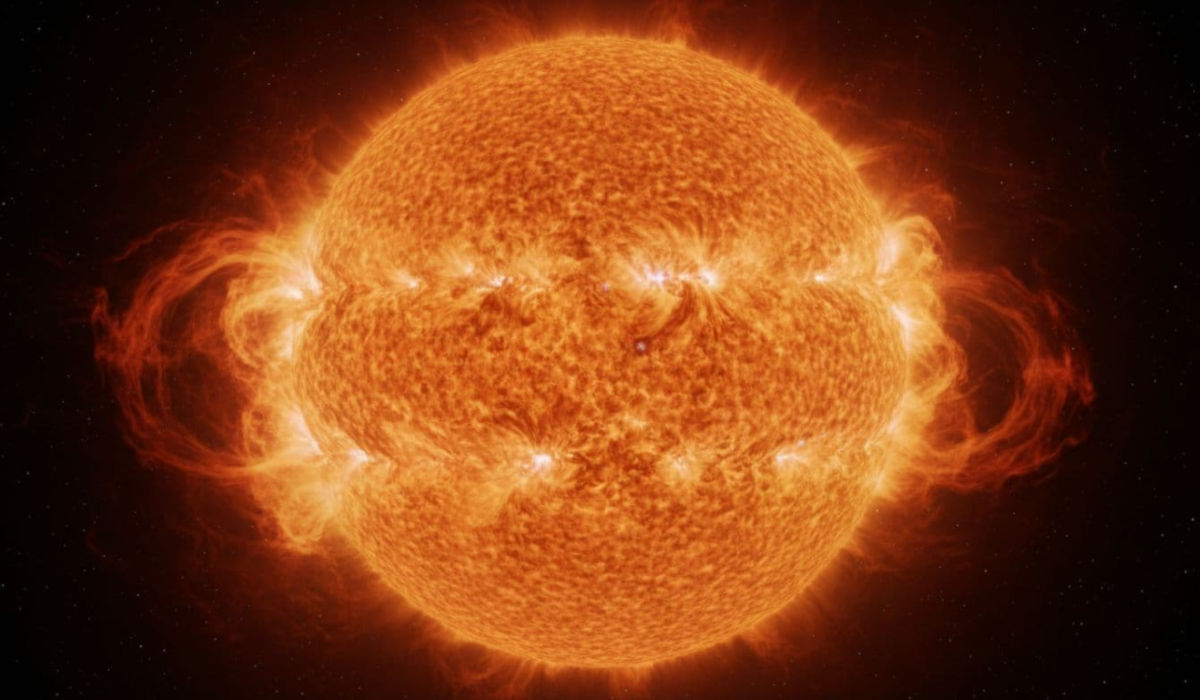
the sun
The Unusual Nature of Our Sun
As you read this, the sun is either shining, or it will be up soon. That matters because without the Sun’s light and heat, Earth’s living things, including you, wouldn’t exist. Life across millions of species would vanish, from tiny bacteria to giant whales.
Only about a half a billionth of the Sun’s total energy reaches Earth. Even so, those small amounts are enough to feed and sustain life here. If we could capture that incoming solar energy well, it could cover modern energy use, with plenty left over.
Many astronomy books describe the Sun as an ordinary star, a common object in space. Some researchers disagree. Dr Martin Reyes, an astronomer based in the United States, has argued that the Sun stands out in several ways. He says there are fewer stars suited to intelligent life than many people think. He also says that if astronomers don’t focus on stars like the Sun, they may spend a lot of effort on poor targets.
As we look at traits that make the Sun friendly to life, it helps to remember that some statements about the wider universe rest on models and best-fit theories.
Key Features That Support Life
Astronomers estimate that about 85% of stars near the Sun belong to systems of two or more stars that orbit each other. The Sun is different because it’s on its own.
In the book Guide to the Sun, astronomer Dr Alan Price notes that a lone star like ours seems less common. A single-star system helps keep Earth’s orbit steadier, which supports stable long-term conditions for life.
A relatively high mass
Dr Reyes also points out that the Sun sits in the top 10% by mass among nearby stars. Dr Price adds that the Sun holds about 99.87% of the solar system’s mass. That strong gravity keeps the planets and smaller bodies under firm control.
Because the Sun is massive, Earth can orbit at about 93 million miles (150 million km) and still remain securely held. That distance also helps stop the planet from overheating.
More heavy elements than many similar stars
The Sun has more heavy elements than many stars of the same age and type. Dr Reyes reports that it contains around 50% more elements such as carbon, nitrogen, oxygen, magnesium, silicon, and iron.
Dr Price explains that the Sun’s heavy-element levels are low in an absolute sense, but many stars have even less. Stars with heavy-element levels like the Sun are often grouped as Population I stars.
This matters for life because heavy elements are needed to build rocky planets and living chemistry. These elements are rare across the universe, making up less than 1% of it. Earth, however, is made mostly of heavy elements, which fits with the idea that it formed near a star like the Sun.
A less stretched path around the galaxy
Population I stars often follow near-circular orbits around the centre of the Milky Way. Guide to the Sun says the Sun’s orbit is less oval-shaped than many similar stars.
A more circular orbit reduces how often the Sun moves into the inner galaxy, an area linked with more supernovas (exploding stars). Fewer close passes through those regions can mean fewer high-risk events for life.
A steadier brightness
Compared with many similar stars, the Sun’s brightness varies less. Its light output stays more even over time.
That stability matters for life on Earth. Science historian James Carter wrote that our presence here shows the Sun’s steady light has been one of the more stable parts of Earth’s environment.
A small tilt to the Milky Way’s plane
The Sun’s orbit is only slightly tilted compared with the flat plane of the Milky Way. The angle between the Sun’s orbital plane and the galaxy’s plane is small.
Far beyond the planets lies the Oort cloud, a vast shell of comets around our solar system. If the Sun’s orbit were tilted more, it would cross the galaxy’s plane in a sharper way. Astronomers say that could disturb the Oort cloud and send many comets towards the inner solar system. A heavy comet bombardment could be disastrous for Earth.
What Total Solar Eclipses Can Show
There are at least 60 moons in our solar system, spread across seven planets. Earth seems to be the only place where people can see total solar eclipses as we do.
A solar eclipse happens when the Moon passes between the Sun and Earth. For a total eclipse, the Moon must cover the Sun almost perfectly in our sky. That needs their apparent sizes to match closely. They do match. The Sun is about 400 times wider than the Moon, and it’s also about 400 times farther away from Earth.
Earth’s distance from the Sun affects more than eclipses. Dr Reyes says that if Earth were a bit closer or farther, it would likely be too hot or too cold for life.
Earth’s large moon also supports life in another way. Its gravity helps keep Earth’s axis from wobbling too much. Without that stabilising pull, Earth could swing through extreme climate shifts. Life benefits from the right Sun-to-Earth distance and a Moon of the right size, alongside the Sun’s other traits.
Chance or Design?
Picture taking your car to a skilled mechanic for a tune-up. The job is done with care, and everything runs as it should. Later, someone claims the precise adjustments happened by accident.
A similar claim is sometimes made about the Sun. Some scientists say the Sun’s make-up, its orbit, its distance from Earth, and other features are just a lucky roll of the dice. Many readers find that hard to accept as a full answer.
As careful work on a car points to a capable technician, the Sun’s life-supporting traits can point beyond chance. The Sun, along with other features of the universe, can be seen as evidence of purpose and design. The apostle Paul expressed it this way: “His invisible qualities are clearly seen from the world’s creation onwards, because they are perceived by the things made, even his eternal power and Godship.” (Romans 1:20)