


Cycles for Life
How does Earth’s biosphere stay self-sustaining and fit for life? The secret lies in natural systems—such as the water, carbon, oxygen, and nitrogen cycles—which keep everything in balance.
The Water Cycle
The hydrological process moves through three main steps:
- Sunlight heats up surface moisture, turning it into vapour that rises into the sky.
- As this purified moisture cools, it gathers to build clouds.
- These clouds release precipitation—such as rain, hail, or snow—returning liquid back to the ground and completing the loop.
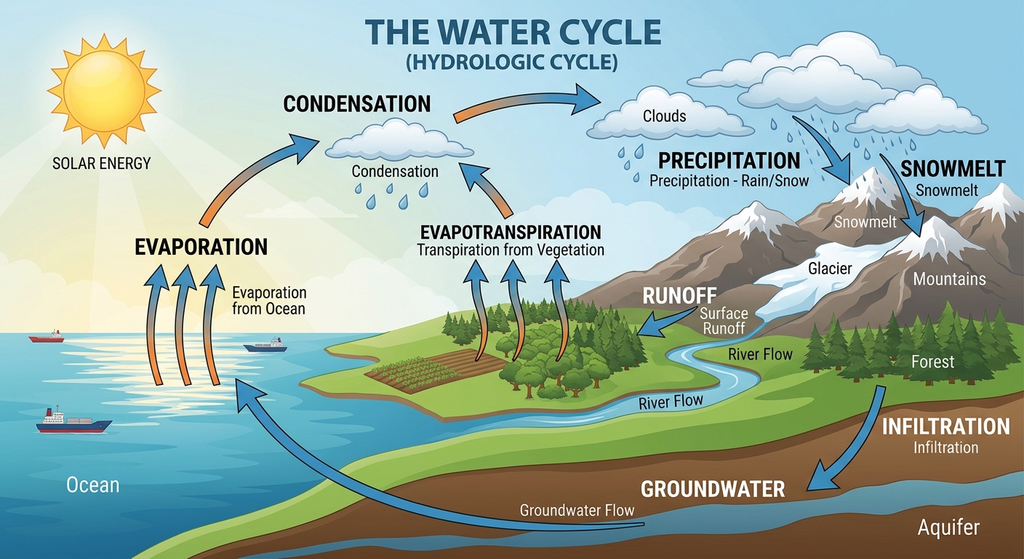
Scientists calculate that this system recirculates enough water every year to submerge the entire surface of the world to a depth of over 100 centimetres.
The Carbon and Oxygen Cycles
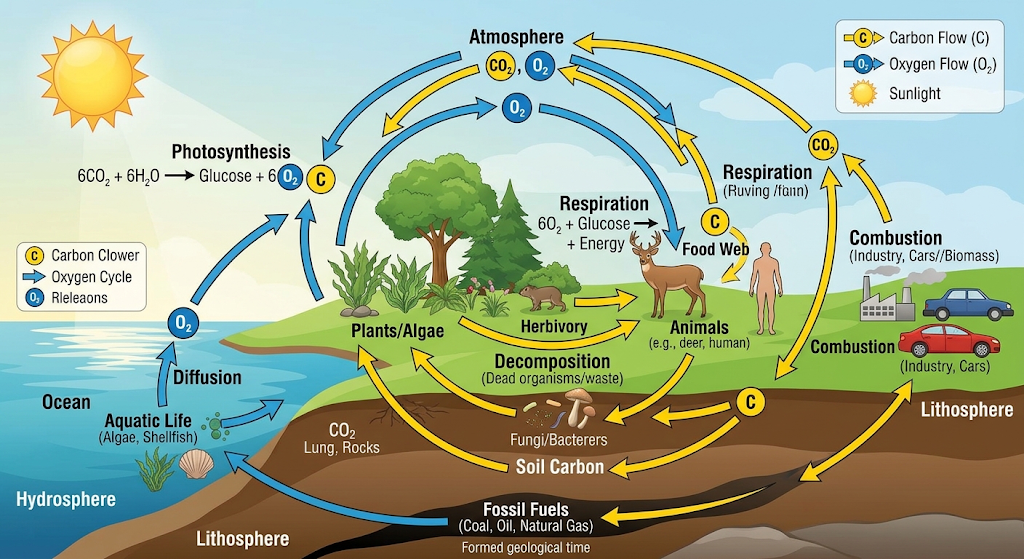
Life relies on two linked actions: photosynthesis and respiration.
Through photosynthesis, plant life absorbs sunlight, carbon dioxide, and water to generate carbohydrates and release oxygen. Respiration occurs when people and animals breathe in oxygen and consume carbohydrates, converting them into energy while releasing water vapour and carbon dioxide back into the atmosphere. The waste from one action fuels the other, creating a clean and smooth system.
The Nitrogen Cycle
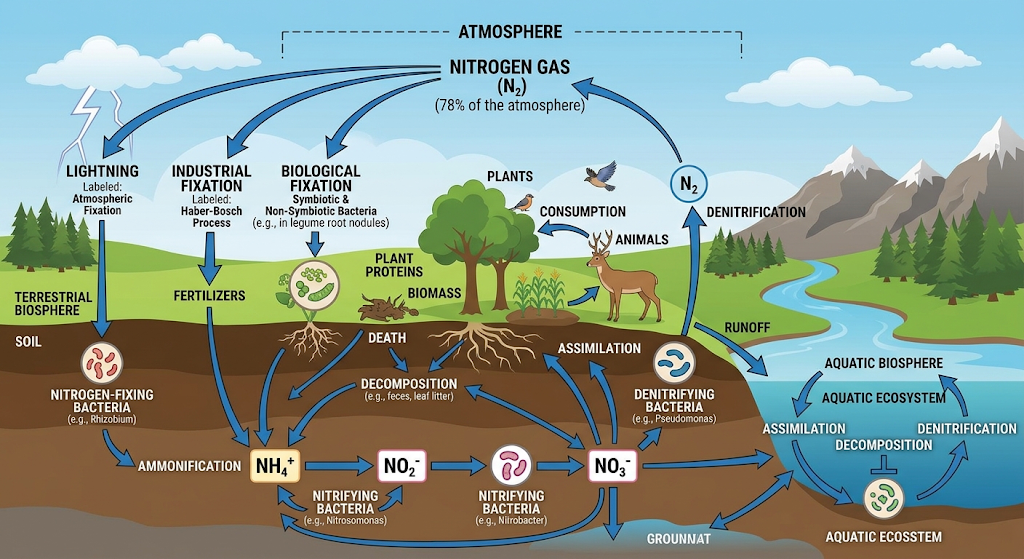
Nitrogen supports the creation of vital building blocks like proteins and amino acids.
- Earth’s atmosphere is 78% nitrogen. The process starts when electrical storms and soil bacteria convert raw gas into nutrients that vegetation can absorb.
- Plants convert these elements into complex organic matter. Animals then consume this plant life and take in the nitrogen compounds.
- As living things die and decay, different microorganisms break down the organic matter, returning nitrogen back to the ground and atmospheric air.
Flawless Recycling
Modern society generates millions of tonnes of hazardous waste that can’t be repurposed. Earth, by contrast, manages to process all of its natural waste seamlessly through intricate biochemistry. Science writer Arthur Vance noted that chance processes alone almost certainly couldn’t have duplicated such incredible environmental balance.
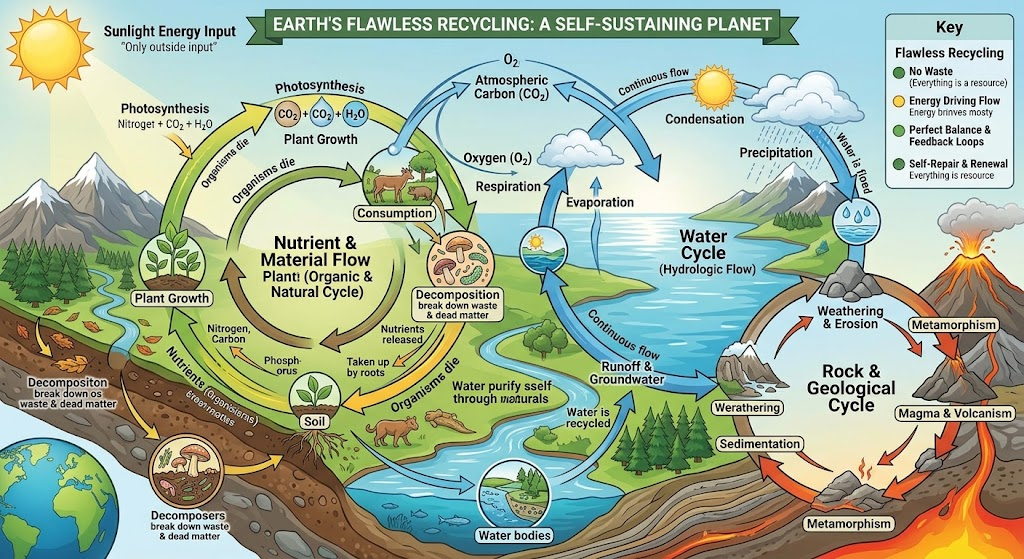
These extraordinary designs remain vital to keeping our world healthy for everyone today So how do you think they all got there, and made them all work silently and to perfection?.