empty gestures
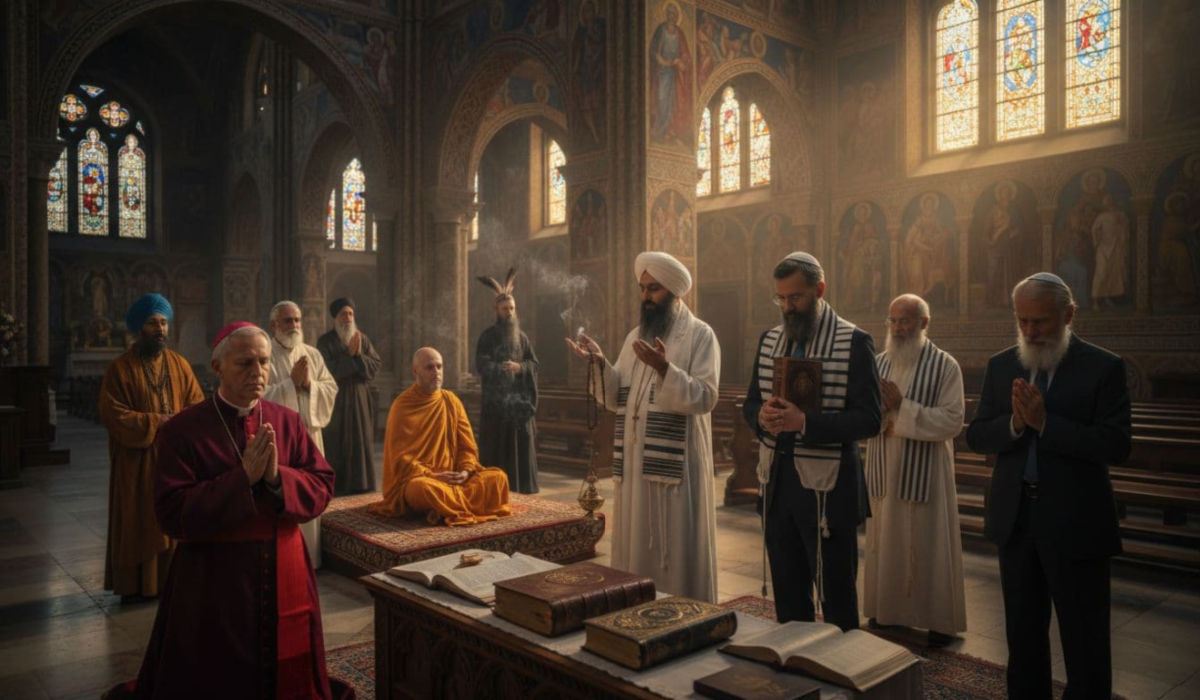
On 24 January 2002, leaders from all religions met in Assisi to pray for peace after the 11 September attacks. Pope John Paul II had called the meeting, as he had in 1986 and 1993. Christians, Muslims, Jews, Hindus, Buddhists, Sikhs, and others took part, while journalists and officials watched closely.
A Day of Prayer and Public Declarations
The leaders travelled from the Vatican to Assisi under heavy security. In a large marquee, delegates gave short statements against war, hatred, and terrorism. Several even admitted that religion often caused conflict.
Some of the strongest words came in brief public appeals.
- A Catholic speaker said, ‘Only peace is holy, war is never holy!’
- A Protestant delegate warned that faith should never lead to hatred.
- Others said peace needs justice, respect, and love for one’s neighbour.
Afterwards, each faith group prayed separately, following its own rites in different parts of the town.
A Shared Pledge, and Doubts
Later, the delegations returned and made a common pledge for peace. The pope closed the day with the appeal,
‘Violence never again! War never again! Terrorism never again!’
Pope John Paul II
The gathering ended with public signs of peace and wide media praise.
Still, many critics weren’t convinced. Earlier meetings hadn’t stopped violence in places such as the former Yugoslavia, Pakistan, Indonesia, the Middle East, and Northern Ireland. Some called the event symbolic but very weak unless real action followed.
The Hard Question
Assisi showed that many religions can speak against violence together. Yet it also exposed a deeper problem. Religious leaders often call for peace, but their traditions have also been used to support division and war.
For that reason, the meeting left an uneasy question behind. Fine words were spoken, but many people still waited to see whether deeds would match them.