The Incredible Filtering System
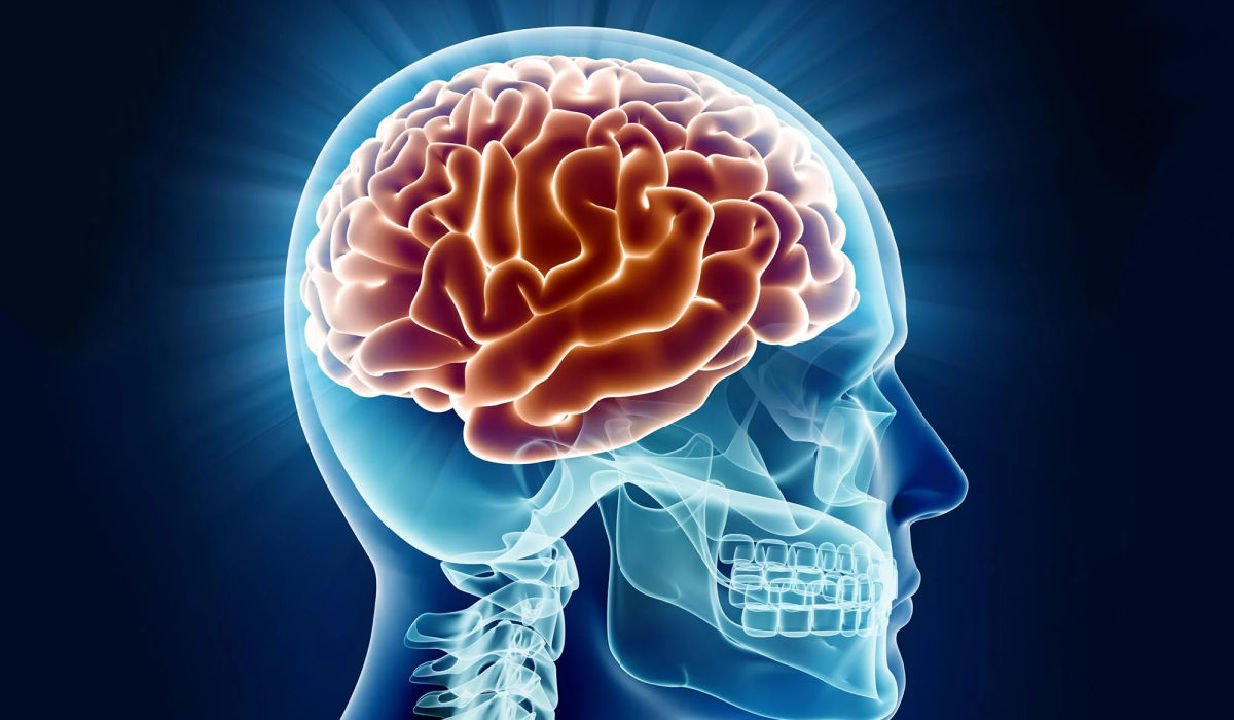
Of all the marvellous things on earth, none is more astounding than the human brain! Did you know that every second, roughly 100 million (100,000,000) bits of information flood into it from our various senses? How does it avoid being hopelessly buried by this avalanche? If we can only focus on one thing at a time, how does the mind cope with millions of simultaneous messages? It doesn’t just survive the barrage—it handles it with total ease.
How the brain manages this is just one of its many wonders, relying on two primary mechanisms…. Firstly, a tiny network of nerves in the brainstem—no larger than your pinky finger—acts as a traffic control centre. Known as the reticular formation, it monitors incoming signals, sifting out the irrelevant noise and selecting only essential data for the cerebral cortex. Every second, this small neural network allows only a few hundred signals, at most, into our conscious awareness.
Second, a further sharpening of our focus occurs through brain waves that sweep through the tissue 8 to 12 times per second. These waves create windows of heightened sensitivity, allowing the brain to detect stronger signals and react to them. Through these periodic scans, the mind homes in on what truly matters. An extraordinary flurry of activity takes place inside our heads every single second!
A Wonder of Nature
Despite massive strides in neuroscience, what researchers have discovered is miniscule compared to what remains unknown. Experts note that after centuries of theory and decades of intense research, the human brain—much like the universe itself—remains essentially mysterious. It stands as a genuine marvel of nature.
That wonder begins right in the womb. Just three weeks after conception, brain cells start forming, sometimes sprouting at a rate of 250,000 cells per minute. Growth continues rapidly after birth. Unlike any animal, a human baby’s brain triples in size during its very first year. Eventually, around 100 billion nerve cells (neurones), along with supporting cells, are packed into a structure that accounts for only 2% of total body weight.
How Signals Travel
Neurones don’t actually touch each other. They’re separated by microscopic gaps called synapses, which are less than one-millionth of an inch wide. Chemical messengers called ‘neurotransmitters’ bridge these gaps—scientists have identified around 30 so far, though many more likely exist.
- Receiving signals: A network of tiny branch-like filaments called dendrites collects incoming messages at one end of the neurone.
- Sending signals: A long nerve fibre called an axon transmits the message out toward the next cell.
Inside the neurone, signals move as electrical impulses, but across the synaptic gap, they turn chemical. While every impulse carries the same electrical strength, the intensity of the message changes based on frequency, reaching up to 1,000 impulses per second.
Use It or Lose It
While the exact physical changes behind learning are still being studied, evidence suggests that acquiring new skills—especially early in life—creates stronger neural connections and releases more transmitter chemicals across synapses. Repeated use reinforces these pathways. As research points out, pathways that are often activated together are strengthened in some way.
Interestingly, ancient scriptures made a similar observation, noting that deeper understanding belongs to mature people who through use have their perceptive powers trained. Unused mental capacity simply fades. Like a muscle, the brain strengthens with exercise and weakens with disuse.
Complex Wiring Diagrams
The vast network of microscopic nerve fibres connecting the brain is often compared to complex electrical wiring. Yet, how these pathways align so precisely according to an internal blueprint remains a major puzzle. Scientists acknowledge that understanding how neurones establish such specific, mapped-out connection patterns early in development is one of the greatest unsolved problems in biology.
The sheer number of these connections is staggering. A single neurone can link to thousands of others, and specialised microcircuitry exists directly between dendrites, adding entirely new dimensions to how the mind functions. Researchers estimate that the billions of neurones in a human brain form up to a quadrillion connections. This gives the brain an astonishing storage capacity—equivalent to around 20 million volumes, matching the contents of the world’s largest libraries.
The Power of the Cerebral Cortex
The cerebral cortex is what truly sets humans apart from animals. Less than a quarter-inch thick, it sits folded against the inside of the skull. Unfolded, it would cover about two and a half square feet, packed with roughly 10,000 miles of connecting fibres per cubic inch.
Unlike animal brains, a massive portion of the human cortex isn’t tied to basic survival or bodily functions. Instead, it’s reserved for higher-level thought processes. We aren’t simply smarter apes…. Our minds make us qualitatively different from all other life forms.
Innate Ability versus Instinct
What makes the human brain unique is its capacity to learn a wide variety of complex tasks. In computing terms, hardwired refers to fixed, built-in circuitry. In people, hardwiring represents innate potential rather than pre-programmed knowledge. Animals rely heavily on fixed, hardwired instincts but have limited ability to acquire new skills. Humans possess vast built-in potential to learn, though the knowledge itself must be acquired through experience.
Human neural equipment comes pre-assembled to build concepts from what we see, process language from what we hear, and form abstract thoughts from our experiences. Without real-world input and learning, a functional mind doesn’t develop. Yet, because our brains provide this open-ended framework, people have the free will to shape their own intellect based on personal goals, values, and choices.
The Miracle of Speech
Language is a prime example of built-in capability paired with incredible flexibility. Researchers agree that human brains are genetically wired for language development, featuring an innate capacity for speech processing.
Yet, specific languages aren’t hardwired. A child raised in a multilingual household can easily pick up two or three languages simultaneously. This natural adaptability highlights why attempts to teach symbolic language to animals fall far short of human communication.
Studies of ancient languages reveal that speech didn’t simply evolve from animal grunts. Even the oldest known languages were highly sophisticated—often far more complex than modern ones. Scientists admit that the exact origin of structured speech remains a baffling mystery. To many, this innate neural framework strongly points to deliberate design.
Exceeding Evolutionary Needs
The human brain possesses vastly more potential than anyone can use in a single lifetime—it could easily store a billion times more information than we currently gather. This creates a major puzzle for evolutionary theory, which relies on natural selection favouring small, immediate survival advantages. Evolution doesn’t produce massive, unused surplus capacity.
Consider what happens when a pianist plays a complex piece….
- Precision: The brain instantly coordinates fast, precise finger movements over the keys.
- Timing & Force: It calculates exact rhythm, speed, and pressure for every single note.
- Real-time Feedback: If a wrong note sounds, the brain instantly detects the mistake.
This incredible feat requires years of practice, but it’s only possible because the underlying capacity for music is built in from the start.
Empathy, Art, and Self-Reflection
Unlike animals driven purely by instinct, humans possess qualities that mirror a higher level of intellect and moral design. We display true altruism—unselfish sacrifice for others—even when it comes at a personal cost.
Humans thrive on creative, reflective, and conscious experiences….
- Goal Setting: We form abstract ideas, set long-term plans, and take pride in accomplishing them.
- Appreciation: We have an innate love for beauty, art, music, and discovery.
- Conscience: We navigate moral choices through an internal sense of right and wrong.
- Connection: We find deep purpose in loving, giving, and building meaningful relationships.
When people look up at the night sky or gaze across a mountain range, they feel their relative smallness and ponder their place in the world. We naturally ask why we are here and where we are going.
Long before modern science unravelled the genetic code, ancient writers marvelled at human development, noting that an embryo’s structure seems written down before its individual parts take shape. Today, we know that a fertilised cell holds the exact chemical instructions and internal timetables to build the heart, eyes, limbs, and brain.

The existence of the human mind remains an extraordinary wonder—a testament to incredible design.