Ancient Babylon

Babylon — History, Prophecy, and Meaning

Ancient Babylon stood on a fertile plain south of modern Baghdad. With massive double walls, a wide moat, grand temples, and famous gardens, it was viewed as a city of wonders. The Bible calls it the “Mistress of Kingdoms,” the centre of the third major world power in Bible history, allowing its record to be compared with secular findings.

The book of Daniel names Belshazzar as Babylon’s ruler. Historians once doubted he was ever king, but archaeological discoveries changed that. Clay cylinders from Ur record King Nabonidus praying for “Bel-sar-ussur, my eldest son.” Later evidence showed Belshazzar ruled as regent while his father was away—precisely matching the Bible’s description.

Babylon was also steeped in astrology and divination. The Bible says its king “looked into the liver” before attacking Jerusalem. Archaeologists later uncovered dozens of clay liver models used for omens, confirming this practice and supporting the biblical setting.
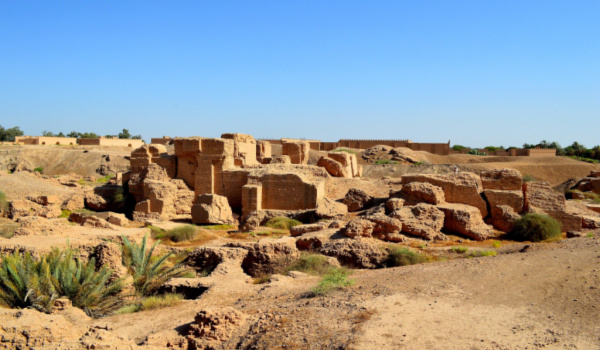
babylon today. (1)
True to prophecy, Babylon was destroyed, never to be inhabited again.

Two centuries before Babylon fell, the prophet Isaiah foretold its destruction and permanent desolation. Babylon was judged for destroying Jerusalem in 607 B.C.E. and exiling its people for 70 years—a period the Bible had already predicted. In 539 B.C.E., as that period ended, the Medes and Persians captured Babylon, beginning its decline into ruins.

Isaiah even named Babylon’s conqueror in advance: Cyrus of Persia. He foretold that gates would open before him and the Euphrates would “dry up.” Greek historians later recorded that Cyrus diverted the river, allowing his troops to enter the city through unguarded gates. Babylon fell in a single night, fulfilling the prophecy in striking detail.

Revelation later uses “Babylon the Great” as a symbol for a global religious system. Ancient Babylon’s beliefs—multiple gods, immortal-soul teachings, and elaborate temple worship—spread widely and appear today in many forms across Christendom. Together, these traditions form the symbolic Babylon the Great.

Similar Posts

  • chance or intention?

    Many people believe that life originated from chance alone (the big bang) or through a chain of unguided events (evolution). This article takes a different view. It presents a Christian belief that God created the world and human life and that it is not a summary of scientific accepted opinion. Modern culture often treats random…

  • getting their priorities right

    Across the world, governments continue to pour obscene sums into weapons built for destruction. These machines aren’t about safety—they’re engineered to erase neighbourhoods and lives. When leaders prioritise military expansion, they expose their true political values. $7,540m spent on weapons instead of feeding the hungry. The gap between their speeches and their spending speaks louder…

  • on the never never

    UK public sector debt in early 2026 By the start of 2026, the UK’s public sector net debt stood at roughly £2.87 trillion to £2.93 trillion, which was about 93% to 94% of GDP and the highest level seen since the early 1960s, with the burden working out at around £102,000 for each household across…

  • we’re no cheats

    Retailers reject profiteering claims Fuel retailers have hit back at government claims of profiteering after oil prices jumped during the US-Israel conflict with Iran, and they say the language has led to abuse of shop staff The RAC says petrol prices are now at their highest level for 18 months, which has brought fresh pressure…

  • empty gestures

    On 24 January 2002, leaders from all religions met in Assisi to pray for peace after the 11 September attacks. Pope John Paul II had called the meeting, as he had in 1986 and 1993. Christians, Muslims, Jews, Hindus, Buddhists, Sikhs, and others took part, while journalists and officials watched closely. A Day of Prayer…

  • government corruption

    The UK recorded its lowest position yet in Transparency International’s Corruption Perceptions Index, falling to 20th place in 2023. This drop points to rising concern about political misconduct, lobbying, and conflicts of interest. Common complaints include cronyism, such as the award of COVID-19 contracts and public roles to political allies, as well as undue influence…