historic-turning-point-scene

A turning point in history

The uprising in France happened more than two centuries ago, yet its causes and its warnings still echo. When the fortress in Paris fell on July 14, the ruler of France asked whether it was a revolt. The reply was simple and sharp… “No, Sire, it is a revolution.” That moment showed how far the royal court had drifted from the real suffering of the people, and how unable it was to see the deep changes that were about to reshape the country and offer a glimpse of what the future might hold.

A Nation on the Edge

By the late eighteenth century, hunger had already pushed many communities into unrest. Millions relied on charity just to stay alive. Royal authority was fading, the government resisted reform, and thinkers questioned whether the ruler’s power should outweigh the needs of the nation. The country was sliding toward a breaking point, and the people felt it long before the palace did.

The Gathering of the Estates

A financial crisis forced the ruler to summon the body known as the States‑General. It brought together three groups: the clergy, the nobles, and the common people. Yet each group had only one vote, even though the common people made up nearly the whole nation. This meant that the clergy and the nobles, who held great wealth and paid no land tax, could block any attempt at change. With hunger rising and injustice plain to see, the representatives of the people condemned the unfair system, the heavy taxes, and the luxury of the powerful. Even so, the ruler seemed safe, as many still believed he ruled by divine right. But within a few years, the monarchy collapsed and a wave of dechristianisation began.

The Rise of a New Assembly

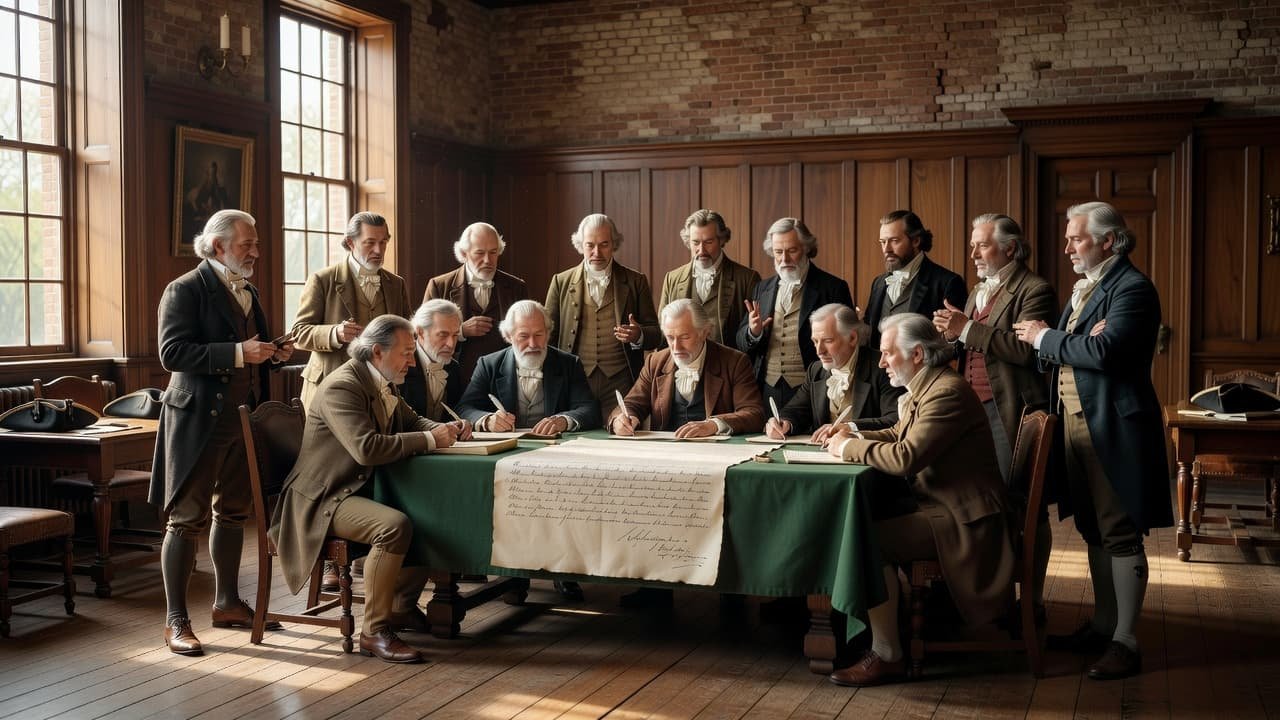
In the spring of 1789, the push for change grew stronger. When some nobles refused to accept a new voting method, the deputies of the common people declared themselves the National Assembly. This marked the fall of absolute monarchy and the rise of a new political force. Yet fear spread through the countryside, and many believed the ruler and the nobles were plotting to crush the Assembly. This fear drove people to attack estates and mansions, and the unrest soon grew into a mass revolt. To restore order, the Assembly swept away the privileges of the nobles and abolished the old feudal system. In a matter of days, the foundations of the old order were gone.

The Declaration of Rights

The Assembly then drafted the Declaration of the Rights of Man. It announced the ideals of liberty, equality, and fraternity. After much struggle, it also recognised freedom of religion and freedom of expression. Many believed they had finally created the perfect form of government. But disappointment soon followed. The church, led by Pope Pius VI, condemned the Declaration, and some revolutionaries rejected it as well, giving way to a growing hunger for violence.

“Some men have power and others have to suffer under them.”
(Ecclesiastes, 8:9)

More than a century later, the United Nations adopted a declaration inspired by the French text. Yet even today, many who praise such rights ignore the principles they claim to uphold.

A Church Torn Apart

The Assembly soon voted to seize church property and required priests to swear loyalty to a new civil constitution. This split the clergy. Some accepted the oath, while others refused and stayed loyal to Rome. The divide led to conflict, and those who rejected the oath were often treated as enemies of the revolution.

War, Fear, and the Guillotine

Threats from abroad added to the turmoil. Other monarchies considered stepping in to restore the French ruler. Trust in the ruler collapsed when he attempted to flee the country. War soon spread across Europe, bringing heavy loss of life. Within France, the revolution grew harsher. The ruler was removed, condemned, and executed. His wife met the same fate. Priests who resisted were deported, and the revolutionaries claimed they were freeing other nations from tyranny, even as they became tyrants themselves.

The unrest worsened when the government ordered a massive draft. A Catholic royalist army rose in the west, seized towns, and killed supporters of the republic. The central government used the chaos to hand power to a Committee of Public Safety, led by Robespierre. Terror became official policy. Courts handed out death sentences freely, and the guillotine became a symbol of the age.

The Drive to Erase Religion

From late 1793, the government launched a campaign to erase Christianity. Churches were destroyed or turned into barracks. Clergy were forced to abandon their calling and marry. Those who refused were arrested, executed, or fled. The Catholic faith was replaced first by the worship of Reason, then by a new deistic faith promoted by Robespierre. His rule became a harsh dictatorship, and the same violence he unleashed eventually consumed him. He was taken to the guillotine in July 1794.

The Road to Another Strongman

After Robespierre’s fall, leaders tried to prevent another dictatorship by placing power in the hands of a five‑member directory. But war and financial collapse weakened the system. In the end, power shifted again to one person… Napoleon Bonaparte. The revolution that began with a cry for liberty ended with another form of absolute rule.

A Warning for the Future

The French Revolution planted ideas that later shaped both democracies and dictatorships. It also showed how quickly political forces can turn against organised religion. In this way, it offers a glimpse of events described long ago.

“And the ten horns that you saw, and the wild beast, these will hate the prostitute and will make her devastated and naked, and they will eat up her flesh and completely burn her with fire.”
(Revelation, 17:16)

“After this I saw another angel descending from heaven with great authority, and the earth was illuminated by his glory.”
(Revelation, 18:1)

“And he cried out with a strong voice, saying… ‘She has fallen! Babylon the Great has fallen!’”
(Revelation, 18:2)

“For by your sorcery all the nations were misled.”
(Revelation, 18:23)

“And in her was found the blood of prophets and of holy ones and of all those who have been slaughtered on the earth.”
(Revelation, 18:24)

Similar Posts